
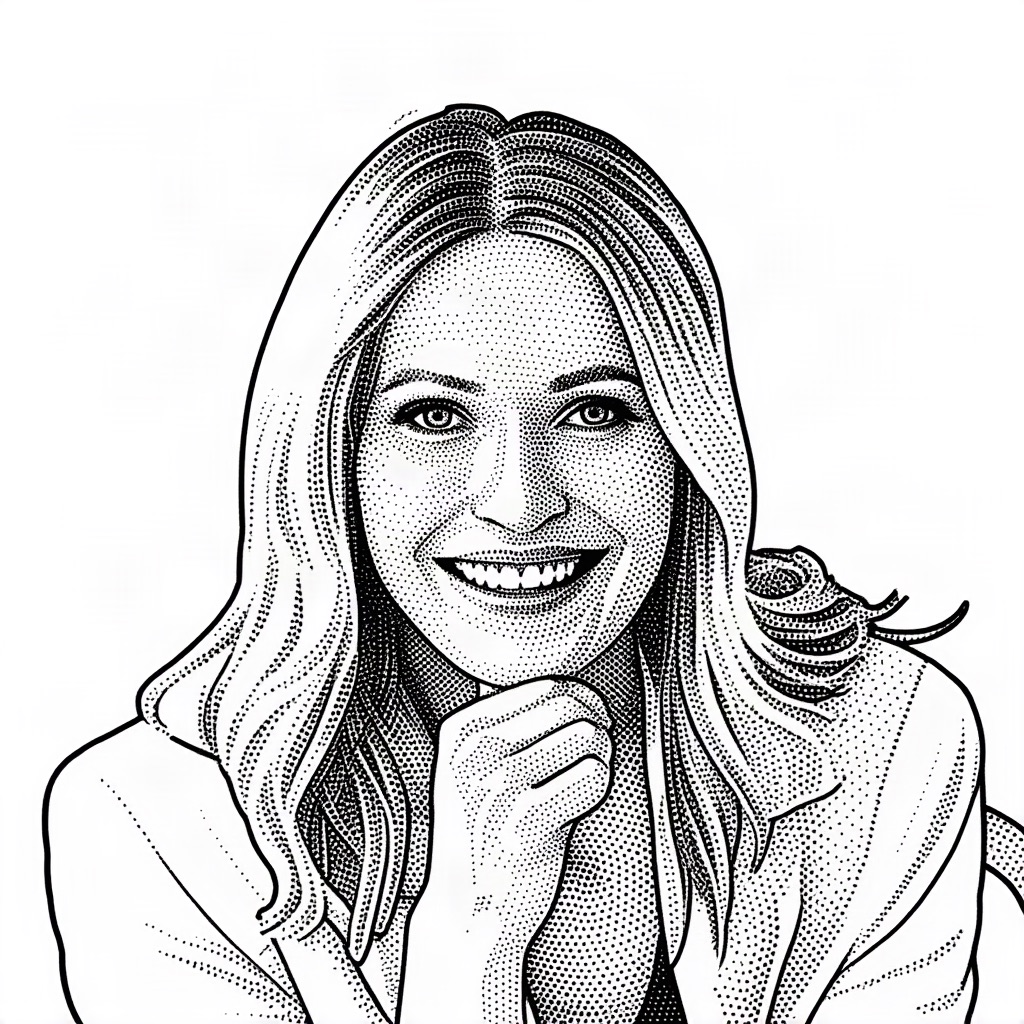
An elderly woman once cornered Sally Hepworth at a book event and confessed she wanted to kill her neighbor. That’s the seed that grew into Mad Mabel, the story of an octogenarian murderer’s secret past, which recently re-entered the New York Times best-seller list after its April debut. Delighted by this unexpected comeback, Hepworth shared her humor and heart with us, including her Judge Judy writing routine and what she’s plotting next. (Hint: It’s a novel about divorce. Guess who’s on the chopping block?)
Mad Mabel’s been trending on our most-finished charts since it came out. What made you turn that book event moment into a full-fledged plot?
It’s very rare for an old woman to be a murderer, although the numbers are higher if you include old women who had a male accomplice. Children are very low; little girls even lower. That got me thinking: I hadn’t seen a book that covered that idea, and it’s always the why that drives me to dig into a book. The funniest thing I landed on was: what if they are actually murdering people all the time, and they’re just really good at getting away with it?! Old ladies with big hearts are the most dangerous people in the world. When they’ve got nothing to lose, they can right the wrongs of the world.

How do you strike the balance between playfulness and things that can be quite dark?
I’m the one who will try to lighten up a bad situation. A slightly morbid story: my girlfriend invited me to come with her for a scan to confirm a miscarriage. She said, “I know you’re not going to hold my hand and say, are you all right?” I said, “Cool, I can be that person.” When the scan confirmed it, and they walked out to give us a minute, I said, “The real clincher is when they’re going to get you to pay five hundred bucks for the scan.” We both cracked up laughing. She said, “That’s why I wanted you to come, Sal.”
That’s my instinct as a writer. With these books, certainly with Mad Mabel, we go to some dark places. People who do terrible things have had terrible things done to them. You don’t add levity to the terrible things themselves, but you can add joy and laughter and hope around them, even around something like a miscarriage.
Mad Mabel is also about female friendship at its core, right?
There’s a line in the book about how there’s no purer love story than that of platonic female friendship. That was exactly where I was at the time of writing this book. I was going through a divorce, which was really difficult, and I was spending a lot of time musing on how, in a time when I was losing my life partner, I was having all these other life partners show up for me, these women who were there before him, who already held so many of my memories that he didn’t have, and yet he was the one given the title “life partner.” I realized I still had my life partners; I was probably wrong to attribute that title only to my romantic partner.
It was also during the writing of this book that my best girlfriend was diagnosed with cancer for the second time. She’s cancer-free now. Getting her through that is, in a strange way, one of the great love stories of my life. She had chemo on Thursdays, so for a year, every Thursday was chemo day. I’d pick her up, play a song on the way there, we’d get cookies for the nurses, and we’d sit there and have a laugh. It got me thinking: who are we without our girlfriends, and what would happen if we didn’t have that? That’s what I was really exploring with Mabel and her beautiful Daphne. We need one person to support us through life. The more hardship we have, the more we need that one person.

Sally and friends
You like to write about underestimated women. Have you felt underestimated yourself?
I often talk about my Irish Catholic upbringing. I was raised in a very loving, close family, unlike Mabel’s, but with a hearty dose of “you’re nothing special, we’re all the same, don’t get too big for your boots.” You’ve got to love that baby-boomer parenting.
Like the other day, I was listening to my daughter sing off-key for half an hour — and I’ve thrown good money on singing lessons, I’m not going to lie, and the whole time I stopped myself from looking at my phone. I gave her my full attention, kept my face still, because I didn’t want to traumatize her and have her complain about me in therapy someday. And I thought, my mum would have said, “That’s awful, go do that outside.” So I don’t take that as an underestimation, I’m actually grateful for it, because it meant I knew I was loved, I knew I was as important as the next person, but no more important. That’s been a gift to bring into my writing career, I’m one of the only authors I know who doesn’t get upset about one-star reviews. I actually find them funny.
I had one that went around my family chat for a while. We all found it funny, from Rhonda. It said, “Before I read this book, I didn’t know why I was put on this earth. But now, having read this book, I know I was put here to tell everyone I know not to read this book.”
I never feel shocked by that, I feel delighted that people like it, and I fully expected some people wouldn’t like my books. That’s what I hope I pass on to my kids: anything that doesn’t go well, you’ve got your family, you’ve got your friends, that’s what’s important.
What do you think other writers learn from you about building community and staying positive in the face of the Rhondas out there?
It’s funny — I don’t know how to do it any other way. I don’t know how to be anyone except me, and I do the things that feel right and authentic to me. I think one thing that matters is that people can smell it out when you bend to what you think will be well received, it can make you less distinct. But it’s also a mistake to try to be like someone else.
I had a new author come up to me once and say her publisher told her to “try and be like Sally Hepworth” on social media. I said, that’s terrible advice. This particular writer wrote romance, and she was gorgeous, young, quirky, had a bit of pink hair, and was really bubbly. I told her: go and be you. You’re adorable, you’d share things I’d have no idea about.
The key for me, with what I share and how often, is that it doesn’t take much from me, it doesn’t cost me a lot of time. You can’t maintain a façade for very long, it becomes onerous and exhausting. Ultimately, it’s the books that are going to sell you. Yes, you have to get them into people’s hands, but you can only ever be the second-best version of someone else, you can be the best version of you.

Signing books at Princeton
Is there anything you put in your books that you suspect readers don’t notice?
Often, just for the amusement of people I know, I put in a teacher’s name, like Mr. Loukas. The girls I went to school with will read it and go, “Mr. Crewe was in there, I saw that.” In my very first book, The Secrets of Midwives, I put in all of my best girlfriends’ names, just as little incidental details.
Do you have any rituals or routines around your writing practice?
Everyone laughs at this, but my writing ritual is that I always have the TV on, on YouTube, playing episodes of Judge Judy. It was monotonous enough that I could still work, unless it was a pit bull case, since she hates pit bulls, and then I’d be up out of my seat. Now it’s just the background of my writing life. It’s me, Judy, and my dog.
What’s your relationship to reading?
It’s frenetic. I’m always listening to an audiobook, sometimes more than one, as well as reading a paper book, usually an advanced reader copy, which is really the main reason I still have a hard copy these days. I prefer what’s called an immersive read — I’ll have a Kindle copy and the audio, so I can read in bed, and then when I get in the car or go for a walk, it syncs up to my earphones.
I read an enormous amount, obviously for pleasure, but I’m also always reading something for research, maybe a nonfiction book or a memoir. I keep an eye on my favorite authors and read or listen to their new books. And if my mum reads a book she really likes — she’s got Parkinson’s, and she was an English teacher, incredibly passionate about children’s literacy, which I am now too, and we’ve always bonded over books, now that she has limited mobility, whenever she’s read a book she loves, I’ll immediately read it too, and we’ll talk about it, because up here, she’s absolutely who she was, and that’s something we can still connect on the way we always did.
My kids are all readers too — audiobooks largely. I have two autistic children, one with dyslexia, and I had to work hard on getting her reading, but we got an Alexa for her room with the Audible app, and she’ll listen to a book before bed. It’s been really amazing for her.
Do you have any favorite bookshops in Melbourne?
Yes, there’s one in my area called The Grumpy Swimmer, in Elwood. It’s tiny, but it’s got mahogany bookshelves with ladders, a really gorgeous curated selection of books, and some pretty little homewares, candles, and things like that. The staff are gorgeous — when I go in, they’re always so lovely to me, they get me to sign copies, all the things you want your local bookstore to be. In Melbourne we have some great bookstores, not as big as the ones I’ve seen in the States, but really lovely, full of book lovers.
Which books would you put in a Sally Hepworth Hall of Fame?
I love, love, love Katherine Center, who’s a humorous, funny rom-com author. She wrote The Bodyguard, one of my favorites. Emily Giffin is one of my favorites too; I think her books are fantastic. Harlan Coben — the twists and turns are just so good. I was so thrilled to see Kathryn Stockett come out with a new book after seventeen years, The Calamity Club. I listened to it on audio, which was so good because of the Southern accents. I was thinking in a Southern accent for a while, trying to feed my kids grits for dinner and stuff, and they were like, what are you doing?
If I had to name a favorite, it would be a real struggle, but it would probably be Where the Crawdads Sing — which makes me very basic, I know, but I just think that was a perfect story, no notes: a young woman, the way the marsh was described, the page-turning plot but also the beautiful literary style. I think it’s as close to perfection in a book as I can imagine.
What are you working on next?
Yeah, I’m just finishing up the next book, which is called The Divorce Hotel — no guessing who’s going to die this time. [laughs]
The thing about divorce — it’s been three years now, and we’re in a good place — but I spent so long, and still do, musing on what makes a divorce an awful divorce, what makes a good divorce, what makes a marriage good, what makes it awkward. Not everyone checks into a hotel when they leave a marriage, but you do check into this strange vestibule of time where you’re no longer married but not really single either. There’s something really significant about what you do in that time, whether it’s accepting and looking at your own part in it, not being a victim, or choosing to indulge in the anger, the victim thing, and that’s when really ugly things can happen.
And then there’s a place that’s just been knocked down around the corner from me, on the beach, this old, decrepit eighties hotel. It was fabulous in the eighties, and then it became decrepit, and everyone, even my beautiful elderly mum, called it the divorce hotel, because people would go get a room there after they got divorced, because it was cheap. Mum would say, “I saw Pam’s son’s car at the divorce hotel, I wonder if something’s going on.” And once I drove past and saw a police car there, and I thought, this is the scene of a book, this is too good.
You can track all of Sally’s books on Margins. Enjoy!
